506th FG Gazette
Mission notes, people, and progress—dispatches worth keeping.
LOCAL NEWS
IWO JIMA
Carl Molesworth "Very Long Range P-51 Mustang Units of the Pacific War"
07 July 45
Number 30 (FC Mission #222) 7 July 45
Mission: VLR Fighter Strike of 15th and 21st Group Mustangs against Tokyo airfields.
Results: Negative.
All aircraft returned early. At 30 degrees 31” north a solid weather front was encountered and word was received from the advance weather plane that the target area was closed in. This is the eighth VLR Mission turned back by bad weather since fighter operations against the Empire began on 7 April.
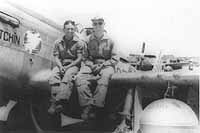
William Lawrence 457th
08 July 45
Number 31 (FC Mission #224) 8 July 45
Mission: VLR Fighter Strike against Tokyo airfields by the 15th and 506th Groups. .
Results: Seven enemy aircraft destroyed and twenty-five damaged.
Our losses: Seven P-51s and four pilots. Twelve Mustangs were damaged.
Aerial opposition was the most aggressive yet encountered. On retirement from the primary target, Hyakurigahara, 15th Group planes were attacked from 5,000 to 8,000 feet by two aggressive Zekes and one of our P-51s was shot down. One Zeke was destroyed by Mustangs and the other was damaged. On Hyakurigahara nineteen enemy planes were destroyed, three considered as probables and fifteen damaged. After leaving the target two squadrons were attacked both from high astern and head-on by an estimated eight to twelve aggressive Jacks which did not break off after initial contact. One P-51 was shot down and three Jacks are claimed destroyed and one damaged.
Tokorazawa, Narimasu, Irumigawa and Toyooka airfields, all four fields situated close together, were hit by the 506th Group. Total claims for the fields: two destroyed, one probable, two damaged. One flight sighted ten airborne Jacks above and ahead during retirement to the Rally Point and destroyed one and probably destroyed another. Flak over airfields targets brought down three planes over the mainland. A fourth plane was lost operationally.
Six P-51s of each group were damaged by flak and one pilot was slightly injured. Most of the damage was caused by machine gun fire. The extent to which the enemy is employing camouflage, dispersal and decoys in concealing his aircraft, as discussed in the introductory remarks in this section, was emphasized during this mission.
WORLD NEWS July 1945
- 1: Australian troops land at Balikpapan, Borneo in the Western Allies' last major land operation of the war.
- 5: General Douglas MacArthur announces that the Philippines have been liberated.
- 6: Norway declares war on Japan.
- 14: Italy declares war on Japan.
- 16: The U.S. conducts the Trinity test at Alamogordo, New Mexico, the first test of a nuclear weapon.
- 17: The Potsdam Conference begins under British Prime Minister Churchill, Soviet Prime Minister Stalin and U.S. President Truman. The Allied leaders agree to insist upon the unconditional surrender of Japan.
- 22: America and Japan engage in a small skirmish in the Battle of Tokyo Bay. The Japanese take slight losses
- 26: The Labour Party win the British general election by a landslide. Clement Attlee replaces Churchill as British Prime Minister and immediately flies to the negotiating table at Potsdam. The Potsdam Declaration is issued.
- 28: The Japanese battleships Haruna and Ise are sunk by aircraft from US Task Force 38 while in shallow anchorage at Kure Naval Base.
- 30: The USS Indianapolis is sunk shortly after midnight by a Japanese submarine after having delivered atomic bomb material to Tinian. Because of poor communications, the ship's whereabouts are unknown for some time and many of its men drown or are attacked by sharks in the next four days.
- 31: U.S. conducts air attacks on the cities of Kobe and Nagoya in Japan.
July 1945

Issue 1 Saturday, Oct 21, 1944
Issue 2 Wednesday, Nov 01, 1944
Issue 3 Wednesday, Nov 01, 1944
Issue 16 Jul 04 1945 Part I